A Path of Snails, A Shepherd’s Path
A reflection from nature and an introduction: The Shepherd's Path: UNiTY26
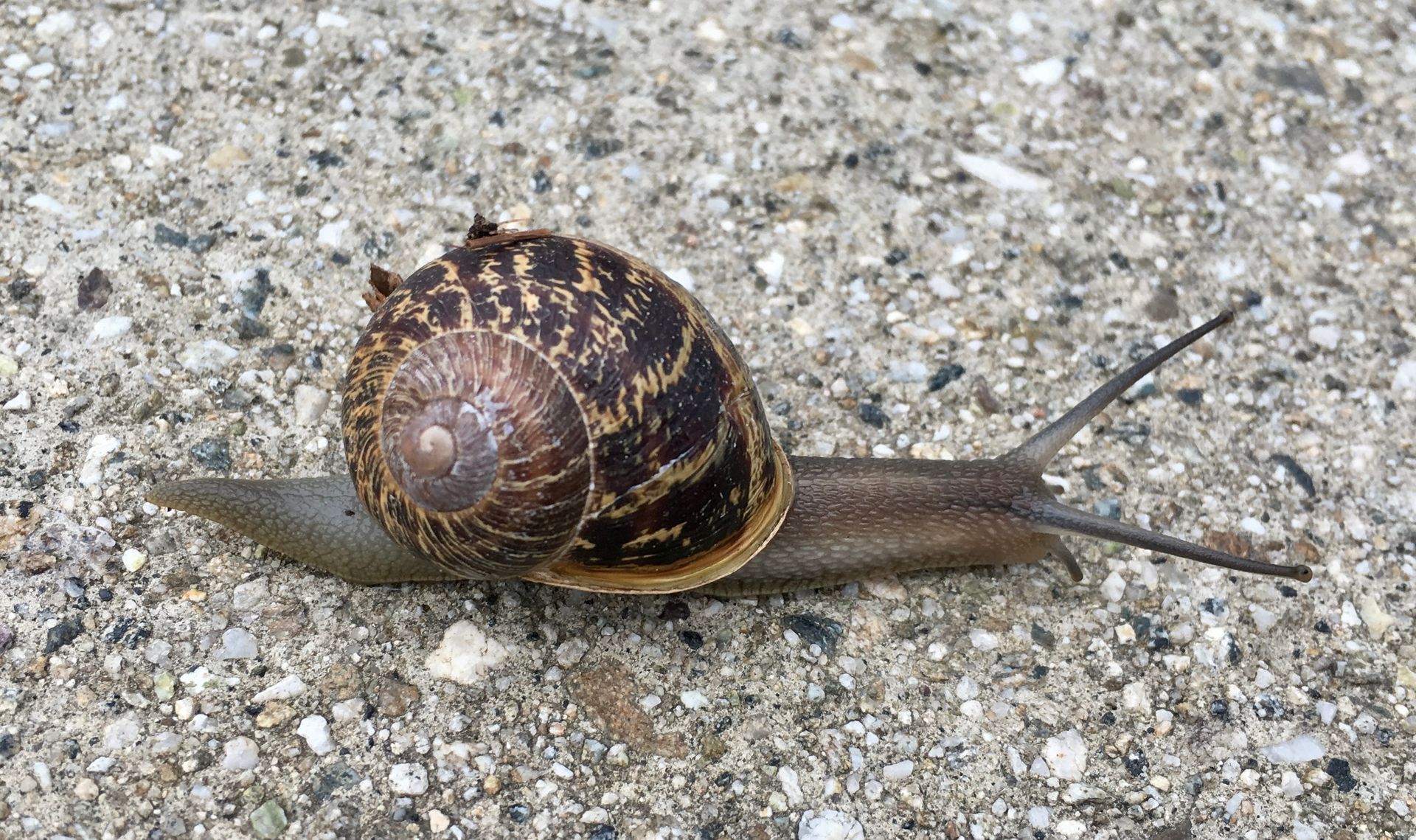
First thing in the morning after rain, the sidewalk can become a manuscript.
Most of us move too quickly to read it. We step over the faint silver lines without thinking, already pulled toward the demandsand intentions of the day. But there it is: a shimmering trail, nearly a beeline across concrete, left by a creature whose progress is so quiet we almost never witness it.
A snail has crossed open ground.
Soft-bodied. Exposed. Carrying its shelter on its back. Moving not with speed, but with steadiness. Not with spectacle, but with purpose.
There is something profoundly human in that small passage.
The snail reminds us that progress is not always loud. Determination does not always announce itself. Sometimes the most courageous movement is slow, deliberate, and timed carefully to conditions that make survival possible. After rain, the world is more forgiving to a snail. The air is damp. The ground is safer. The path becomes possible.
That is not fear.
It's wisdom.
And today, on Memorial Day, that wisdom feels especially meaningful.
We pause to remember those who crossed before us. Those who carried burdens we may never fully understand. Those whose courage made a path for others. Those whose lives, service, sacrifice, love, and quiet perseverance remain part of the ground beneath our feet.
A path is never only made by the one walking it now.
In The Shepherd’s Path, this kind of wisdom matters.
Pépe’s journey is not simply about going farther. It is about learning how to see. How to listen. How to move with intention. How to recognize the difference between danger and discomfort, between fear that protects and fear that confines. Like the snail, he must learn that safety is not the opposite of courage. Often, safety is what allows courage to emerge.
A snail does not abandon its softness to survive.
It protects it, which may be one of its most important lessons.
We live in a culture that often mistakes speed for value, exposure for authenticity, and urgency for importance. The snail offers a different logic. It teaches us to carry what is sacred carefully. It teaches us to move only as fast as we can remain whole. It teaches us that a path is not made by domination, but by contact.
Body to earth.
Moment to moment.
A thin shining line that says: I was here. I kept going.
Pádraig Ó Tuama, reflecting on snails, wondered whether a collective noun for them might be “a path.” He later notes that one suggested collective noun is “a walk.” Both feel right. A path of snails. A walk of snails. Not a swarm. Not a herd or a squadron. A walk.
There is gentleness in that. And, there is also unity.
A walk is not only a movement. It is a way of being together.
That idea sits close to the heart of The Shepherd’s Path. The story honors the reality that none of us walk alone. We move through the world shaped by those who came before us: parents, grandparents, teachers, coaches, neighbors, ancestors, artists, saints, strangers, and companions whose names may never appear in history books but whose love, labor, and sacrifice become part of the ground beneath our feet.
Their wisdom is not always delivered as a lecture.
Sometimes it is a song remembered in a plaza.
A hand on a shoulder.
A story told at the right time.
A meal prepared with care.
A field marked by lines others painted before the game began.
A prayer whispered by someone who may never know whether it was heard.
A trail of silver across the sidewalk before the sun dries it away.
To honor those who have come before us is not to live backward. It is to recognize inheritance. It is to see that every step forward carries memory. Every child who finds courage is, in some sense, carrying the shelter of those who loved them first.
The snail’s shell is not merely protection.
It is history.
It is architecture built through time. A spiral. A home. A record of growth. The snail does not move by leaving itself behind. It moves by carrying its becoming with it.
So do we.
In The Shepherd’s Path, Pépe’s movement toward maturity is not a clean break from childhood. It is an integration. He begins to understand that his vision on the fútbol pitch — his ability to see the whole field, to sense movement, space, timing, and possibility — is connected to a larger kind of vision.
The kind that sees people.
The kind that notices fear without being ruled by it.
The kind that recognizes greatness is not solitary.
The best teams know this.
The best families know this.
The best communities know this.
Unity is not sameness. It is coordinated difference. It is many forms of wisdom moving toward a shared good. A mariachi band does not become beautiful because every instrument makes the same sound. A fútbol team does not become great because every player occupies the same position. A community does not become whole because every person carries the same story.
Unity becomes possible when each offering is honored, tuned, and brought into relationship.
Perhaps this is another lesson from the snail: the path is made through contact.
Not abstraction. Not ideology. Not performance.
Contact.
With the ground. With the body. With the weather. With risk. With timing.
With the quiet intelligence of knowing when to emerge and when to withdraw.
There is humility in that rhythm. There is also discernment.
The snail teaches us that retreat is not always defeat. Sometimes withdrawal is how life protects itself long enough to continue. The shell is not an escape from the world; it is a boundary that makes engagement possible.
In human terms, that boundary might be reflection. It might be prayer. It might be grief. It might be rest. It might be the wisdom to pause before reacting, to listen before speaking, to understand before judging.
And when the time is right, the snail moves again.
Deliberately.
Slowly.
Leaving light behind.
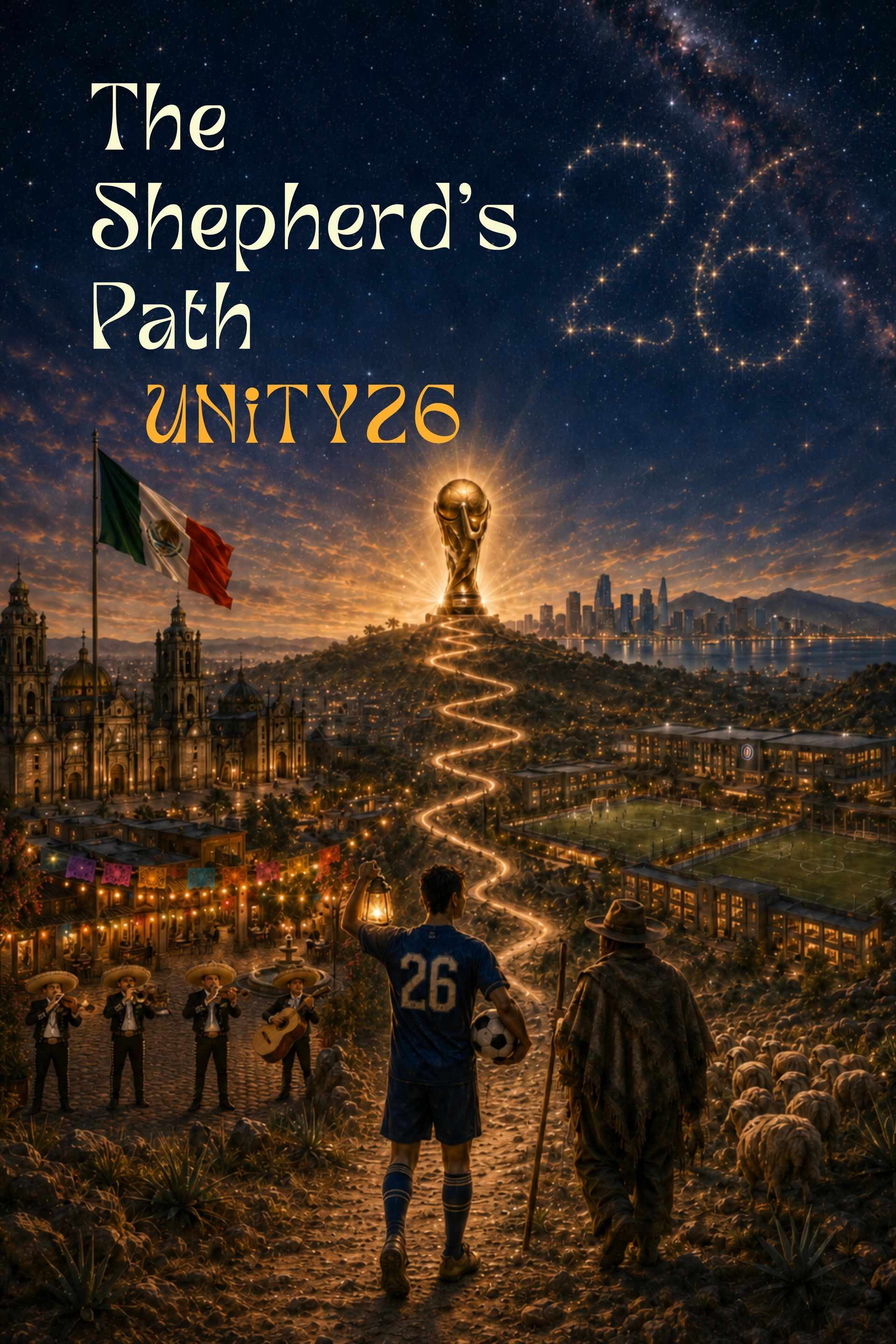
That image feels especially fitting today because The Shepherd’s Path: UNiTY26 has now taken its first public step.
Yesterday, I completed the Kindle Direct Publishing process for the eBook edition. It is currently under Amazon’s review, along with two premium paperback children’s books I have also released into review: Argentia, the silver mare of moonlight and starry glow, and Rhythm, the shadow colt of sunlight and the daily flow. I blogged about them here, as I reflected on 2025 just before the new year. They are now on their way to becoming widely available.
Together, these three books represent different expressions of the same deeper question: How do we help young hearts move through the world with courage, tenderness, imagination, and care?
The Shepherd’s Path is a coming-of-age story about fútbol, family, faith, conscience, and belonging. It follows Pépe, a gifted young player in modern-day Mexico, as the approach of 2026 brings pressure, possibility, and a deeper test of character than any match can fully measure. It is a story about learning that unity does not ask us to become the same. It asks us to make room.
Argentia and Rhythm are companion picture books for children and caregivers. One moves through moonlight, calm, and emotional courage. The other moves through sunlight, creativity, focus, and flow. They are softer stories, but they walk the same path: toward attention, kindness, resilience, and wonder.
As Amazon completes the review process over the next few days, I will share direct links once each title is live and easy to find. I would rather point readers to the books directly than ask anyone to search through categories or guess where they have landed.
My plan is for The Shepherd’s Path eBook to become available first, followed by a paperback edition timed with the opening of the 2026 World Cup. I also plan to continue developing the Spanish edition, with the intention of releasing it first as an eBook and then publishing the Spanish paperback on the day of the World Cup Final.
That timing feels right.
The opening match is a beginning.
The Final is a culmination.
And between them is a path. A road of pressure, beauty, failure, repair, courage, and connection.
Because the path is not only where we are going. The path is what connects us.
It connects the living and the dead. The young and the old. The player and the team. The child and the ancestor. The shepherd and the sheep. The city square and the open field. The song and the silence after it. It connects those who move quickly and those who move slowly.
Those who lead from the front and those whose quiet presence makes courage possible. Those who are seen and those who leave only a trace.
When we notice the snail’s silver line after rain, we are invited to practice a different kind of attention. We are invited to ask what forms of perseverance we have been stepping over. What quiet lives have made our own movement possible. What fragile wisdom has been crossing dangerous ground without applause.
The snail asks us to slow down enough to see the path.
And perhaps, once we see it, to honor it. To honor those who crossed before us.
To walk with greater care beside those crossing now.
And to leave behind, however quietly, a line of light for those still finding their way.
#UNiTYera #UNiTY26
Rinconcito G.R.i.S.