Surrender: A Map to Victory
El Camino del Pastor and The Shepherd's Path: Now Available Digitally and in Paperback
Surrender: A Map to Victory
Today, Argentina and Spain will meet in the final match of the largest and most demanding FIFA World Cup ever played.
Before a champion is crowned, I find myself reflecting not only on who may win, but on what the beautiful game has been teaching us all along.
Every four years, even amid persistent geopolitical conflict, political unrest, climate-related hardship, displacement, abuse, corruption, and suffering across the globe, much of humanity pauses to share something extraordinary.
We gather.
We wear our colors. We remember where we came from. We admire the traditions of others. We celebrate familiar heroes and discover new ones. We experience joy and disappointment alongside people we may never meet, speaking languages we may never learn.
For a few weeks, billions of us become witnesses to the same unfolding story.
The 2026 World Cup has not been a perfect expression of inclusion. Some supporters were unable to participate, and some of the world’s conflicts followed us into the tournament. Unity does not erase those truths. It asks us to see them clearly—and then decide what we will do next.
Because unity is not simply a feeling.
Unity is a mindful decision.
The game itself is a lesson
Football begins with a fascinating limitation: the field players must surrender the use of their most dexterous assets—their hands.
Hands may protect the goal only through the goalkeeper, the last defender of a team’s most precious territory. Everyone else must solve the game differently.
That limitation produces creativity.
Players must develop extraordinary balance, vision, timing, touch, and spatial awareness. They must create openings where none appear to exist. They must anticipate movement, support one another, communicate without words, and trust that a teammate will arrive where the ball—and the moment—require them to be.
No individual, regardless of talent, can move the ball faster than a team working in rhythm.
The greatest players can change a match, but even greatness depends upon movement around them: the teammate making a selfless run, the defender quietly closing a dangerous space, the midfielder receiving the ball under pressure, or the substitute remaining ready for a moment that may arrive only once.
This year’s expanded tournament made that collective effort even more demanding. The eventual champion will have played eight matches—one more than in 2022—because the field of 48 nations introduced an additional Round of 32. The physical and emotional demands have been immense. FIFA explains the expanded format here.
Yet the tournament has also reminded us that achievement is not measured only by lifting the trophy.
Haiti returned to the World Cup after 52 years. Norway’s historic journey inspired thousands to continue celebrating together even after an extra-time quarterfinal defeat. Across three host nations and four time zones, people arrived with different flags, languages, customs, beliefs, and histories—and found common ground around a shared field.
By the end of the group stage alone, 4.6 million people had entered the stadiums, while FIFA Fan Festivals had welcomed another 5.5 million. Those numbers cannot prove unity, but they demonstrate our extraordinary capacity to assemble around a common purpose. FIFA reported the tournament’s record participation here.
And now today’s final offers a remarkable meeting between generations. Lionel Messi, at 39, and Lamine Yamal, at 19, will meet on football’s largest stage—nearly two decades after a now-famous photograph captured a young Messi holding Yamal as an infant during a charity calendar photoshoot.
Whether planned or accidental, life sometimes creates poetry.
A squadron above the water
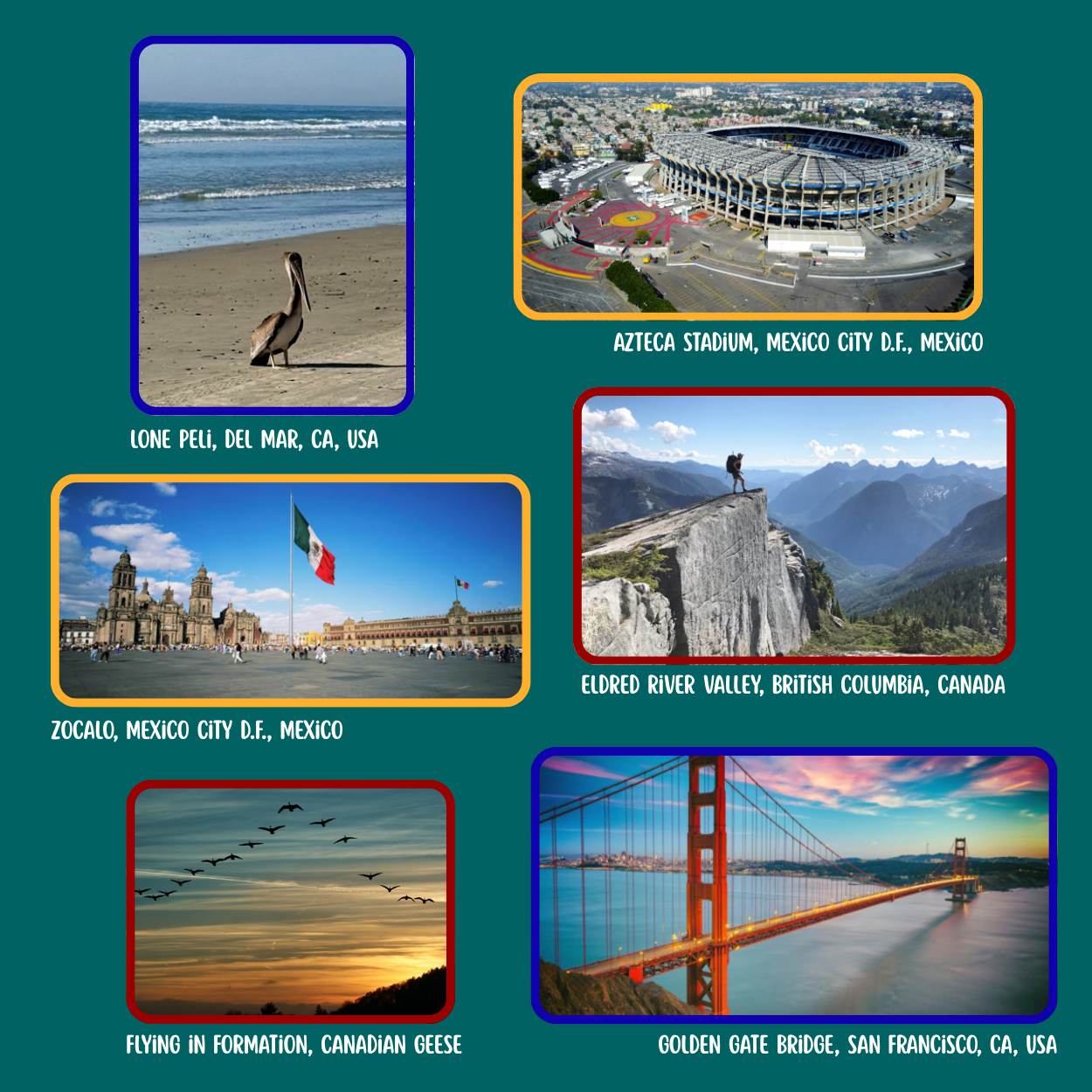
Closer to home, I have found a similar lesson in the pelicans.
A solitary pelican can appear almost anchored to its surroundings—calm, patient, and assured. Smaller birds often seem comfortable nearby, as though its presence signals that this is a safe place to pause.
But when pelicans rise together, their collective name becomes especially fitting: a squadron.
They move with an elegance that seems almost effortless. Like Canadian geese familiar to those farther north—and ibises that may be observed across Mexico—they often travel in a V-shaped formation, using the air displaced by the birds ahead to reduce resistance for those following.
The bird at the front accepts the greatest burden. When it tires, another can move forward.
Leadership rotates. Progress is shared.
No bird becomes less important by leaving the lead. No bird at the rear is merely being carried. Each is participating in an arrangement that allows the whole group to travel farther than its members could travel as efficiently alone. Research into formation flight supports this elegant natural principle: those following experience less resistance, while shared leadership helps distribute the work.
Nature rarely confuses leadership with permanence.
Perhaps we should not either.
Surrender is not defeat
“Surrendering to flow” does not mean becoming passive. It does not mean ignoring injustice, abandoning ambition, or pretending that painful obstacles do not exist.
The challenges appearing in our paths can be considerable. They carry consequences—sometimes fatal for individuals, devastating for nations, and potentially existential for us as a species.
But when an obstacle is not immediately fatal, it can also become a teacher.
It may invite us to change position.
To ask for support.
To release a plan that no longer serves its purpose.
To make space for another person’s strength.
To lead when the moment calls for us—and to follow with equal dignity when someone else can see the path more clearly.
Every day we are privileged to look toward the horizon as the sun appears or falls from sight, and throughout every magical moment in between, we are given another opportunity to choose how we participate.
The surrender and the victory both live within us.
Flow is not the absence of effort. It is effort aligned with awareness, trust, preparation, and purpose.
That may be what football teaches us best. Eleven people cannot occupy the same space or solve every problem independently. They must spread out, remain connected, recognize changing conditions, and keep choosing one another.
Perhaps humanity’s path forward asks the same of us.
A story for the path ahead
This idea—that unity is not merely something we feel, but something we choose—is central to my young-adult novel, The Shepherd’s Path, and its Spanish-language edition, El Caminito del Pastor.
Set against the approach of the 2026 World Cup, the story follows a young person navigating football, family, grief, faith, friendship, identity, and the quiet decisions that help shape who we become. It asks what can happen when we remain curious about one another, learn from traditions beyond our own, and discover that finding our path does not require walking it alone.
As today’s final approaches, I wanted to gently remind friends that both editions are now available in all four formats:
If there is a young adult, parent, coach, mentor, or respected educator in your life who might find the story meaningful—or who may simply be curious— I would be grateful beyond measure if you considered sharing it with them.
Later, one team will lift the trophy.
But perhaps the more enduring victory is available to all of us: the decision to create space, offer support, share leadership, remain connected, and move forward together.
That is surrendering to flow.
And it may be, collectively, our most important map to victory.
Rinconcito G.R.i.S.